Trail Building 101: Sustainably Maintaining Mountain Bike Trails
Our mission is "to create, maintain, and protect sustainable mountain biking opportunities in Washington for all riders." Key word: sustainable! For us, sustainability can mean a few different things in the trail maintenance world: environmental sustainability, social sustainability, and economic sustainability.
While we design trails with longevity in mind, maintenance is a shared responsibility. Our trail crews and volunteer community share that work together, and we count on riders to give back through our volunteer work parties. Our trail building and maintenance practices are built on years of experience and research.
Sustainable trail design matters because it minimizes long-term land impacts, reduces future repair needs, improves the overall riding experience, fosters stronger recreation communities, and lowers ongoing maintenance costs.
Environmental sustainability ensures trails work with the landscape: maintaining natural hydrology to keep water off the tread, protecting natural and cultural resources, and discouraging unsanctioned trail building. Social sustainability ensures trails meet the needs of the riders who use them: providing access and progression, reducing user conflicts around speed and direction, and fostering community and advocacy. Economic sustainability means building trails that local economies and land managers can actually afford to maintain over time, so the benefits of trail access reach communities for the long haul.
So we're not just building mountain bike trails. We're creating long-term opportunities for outdoor recreation, a process rooted in thoughtful planning and assessment of the terrain. Here's the short version of how it all comes together, and where our volunteer work parties fit in.
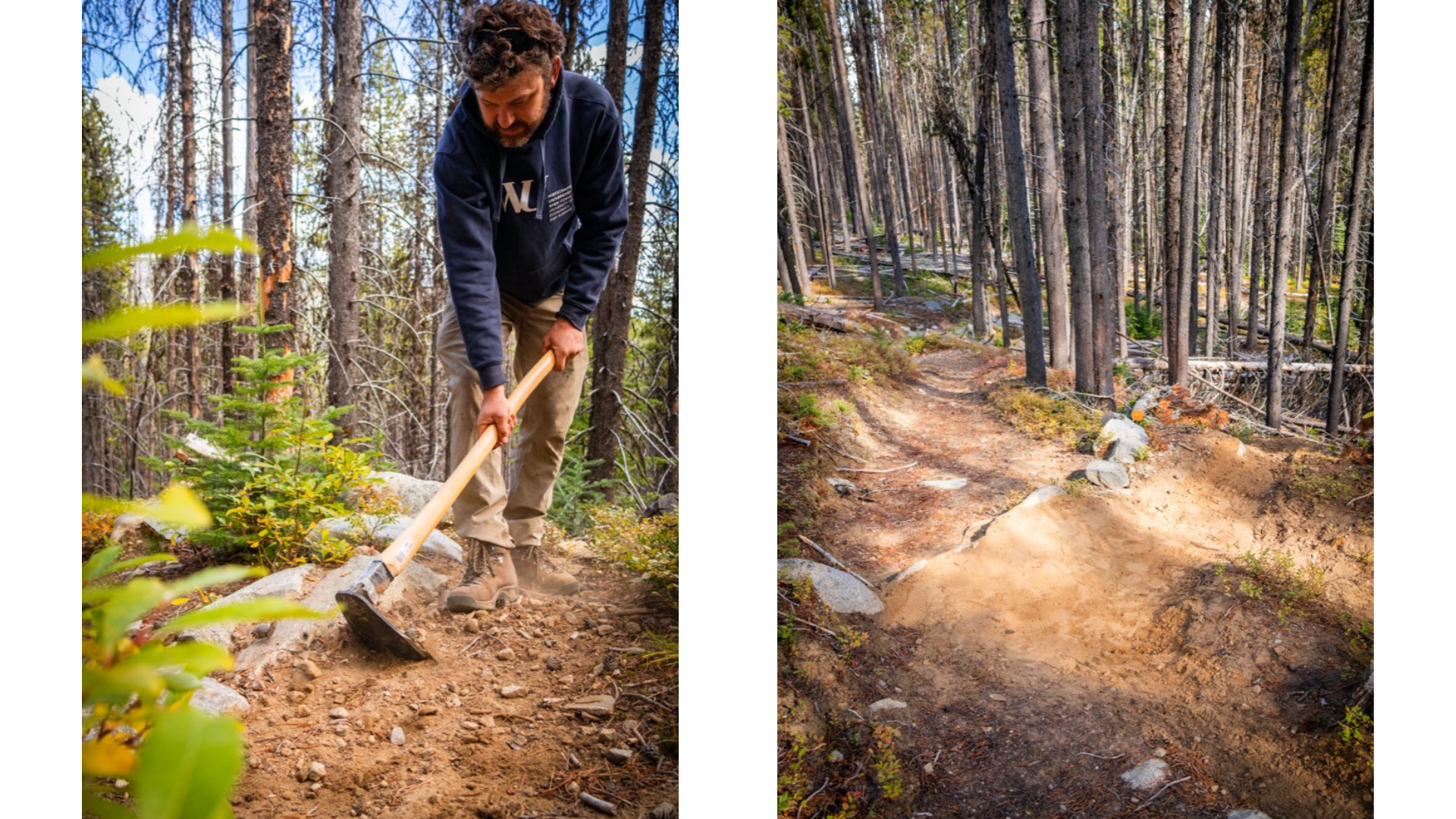
Trail Builder Erich Zimmerman demonstrating how to repair a drainage on the Gibraltar trail in the Colville National Forest (before & after)
Drainage
Water management is essential to preventing erosion, muddiness, and tread widening. Especially here in Washington, where we have a wide variety of climates, terrain and soil types.
- Grade reversals: Also known as rolling dips, these built-in undulations let water drain at low points, keeping runoff from traveling down the tread.
- Maintenance: Clearing drainages of debris, adjusting water bars, and directing runoff into vegetated areas.
Grade and Alignment
Grade and alignment are some of the primary factors in trail durability.
- Fall-line trails: Trails running directly down a hillside function as drainage channels, accelerating soil erosion during rain events.
- Sustainable alignment: Trails built across the slope at a grade shallower than the hillside allow water to shed laterally off the tread. Research consistently identifies proper grade and alignment as one of the most effective predictors of long-term trail integrity.
When existing trails, often former logging roads or informal paths, lack these design elements, rerouting to a sustainable alignment is generally more effective than repeated surface repair.
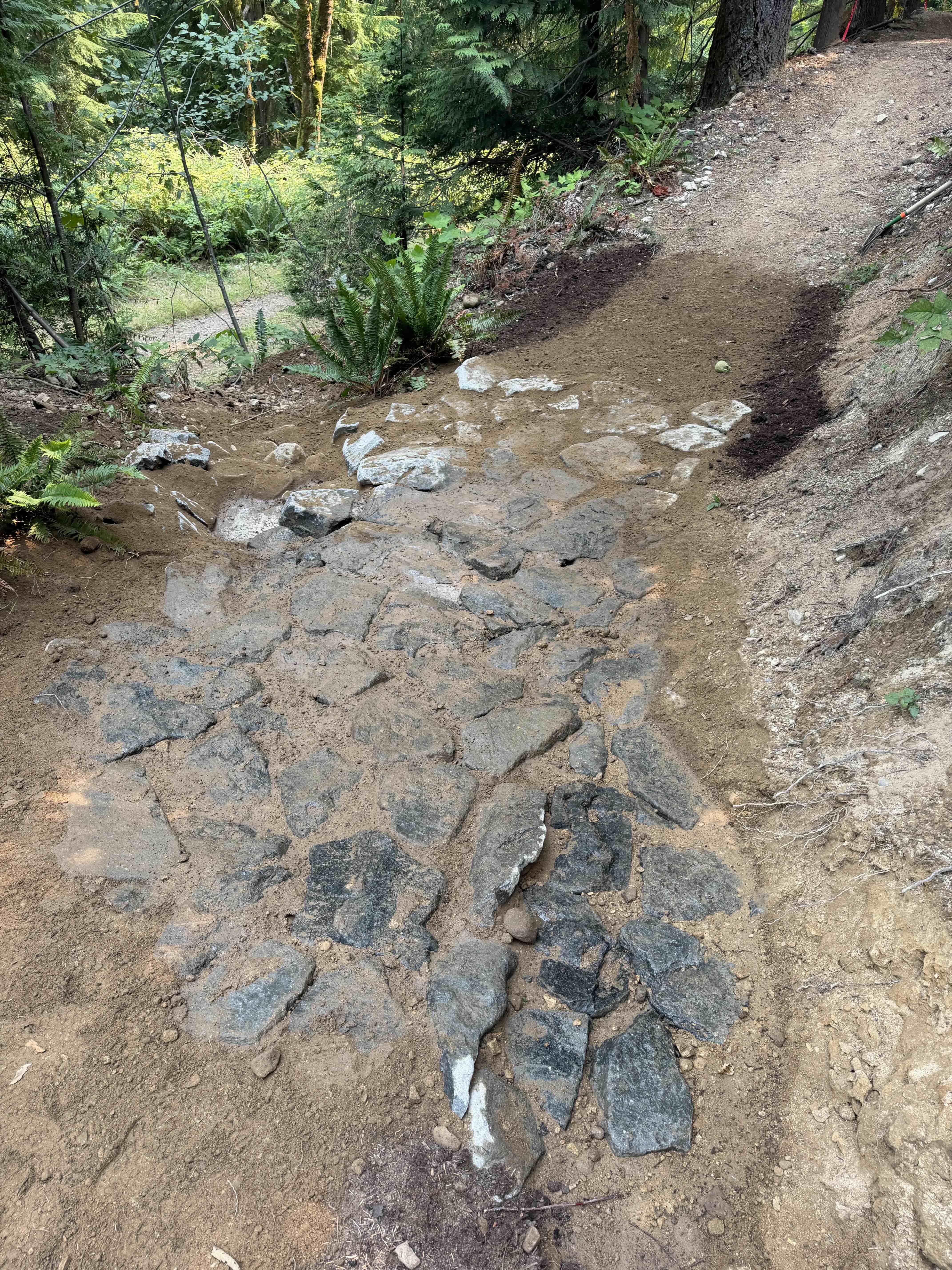
New rock armoring on Trail E at Raging River
Tread Construction
After drainage and alignment are addressed, tread durability can be improved with construction techniques depending on the terrain:
- Armoring sections with rock in high-traffic or steep areas
- Constructing full bench cuts into the hillside for stability
- Elevating the tread in consistently wet areas
Ongoing Maintenance
Trails degrade naturally over time, whether they're ridden often or not: drainage features collect sediment and leaf litter, tread widths expand, corridors get overgrown and sightlines disappear. Ongoing maintenance is what protects and preserves the original design and features. And that's where our volunteers come in!
Volunteer Involvement
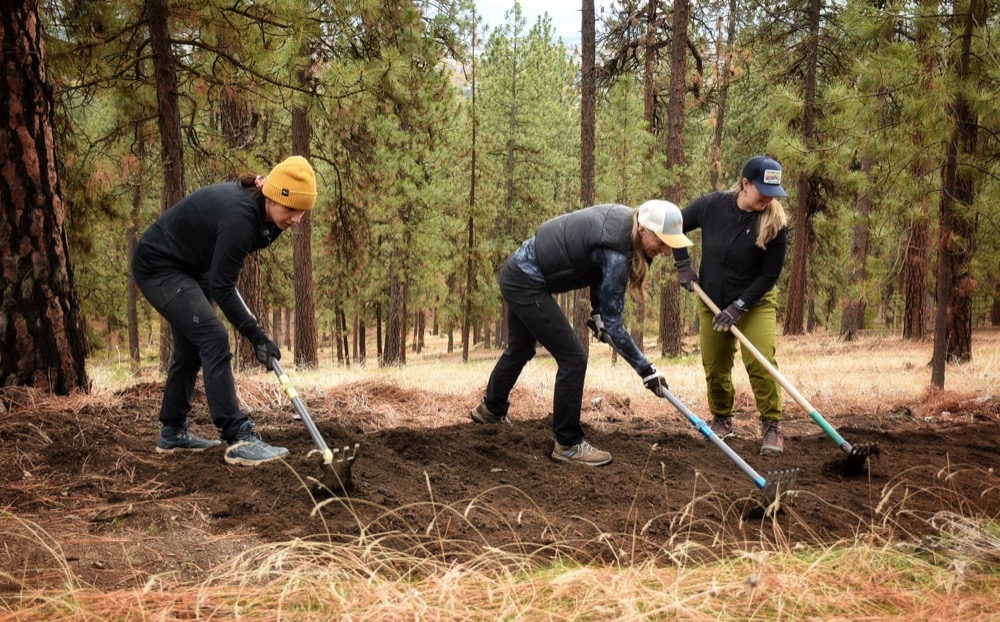
All mountain bike trails require maintenance. Each year, our volunteers contribute an average of 26,000 hours across Washington helping us with important work like fixing erosion, clearing drains, cutting back overgrowth, removing downed trees, building new trails, and making sure existing ones are safe and fun to ride.
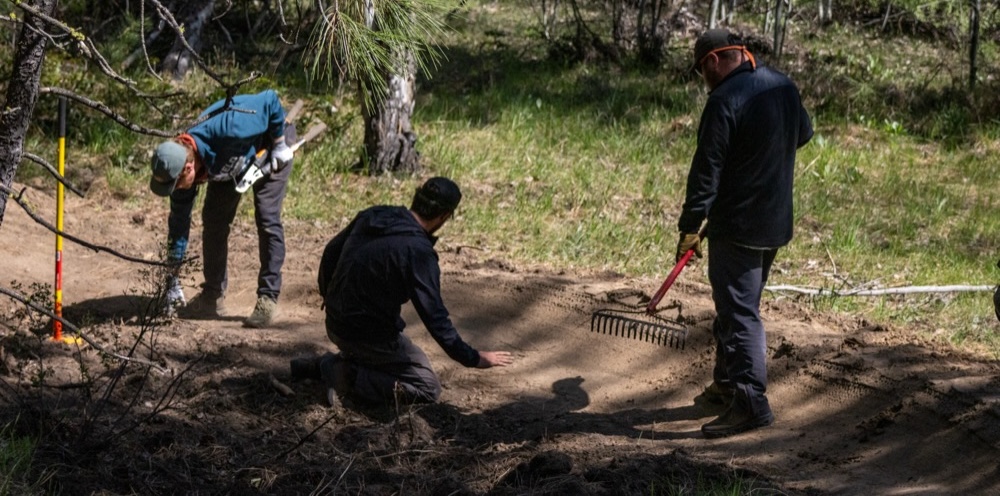
We host volunteer work parties regularly all over the state to tackle this work together. We provide the training and tools, you just come ready to get a little dirty.
And just like riding, trail building is fun. We always make sure to have a good time at work parties! They're as much a social event as they are about digging, so bring along your friends and family. It’s also a great way to meet new riding buddies and share a descent together after working.
Check out our work party calendar to find volunteer opportunities near you:
Oh, and here's a little mountain bike secret: working on trails will absolutely make you a better rider.